Online School
Staying Motivated When You Feel Stuck or Behind: Mindset Habits for Completion

Read time: 6 minutes
While the feeling of a flexible, self-paced online high school program can feel empowering and freeing, it can also be challenging. When a difficult subject stalls your momentum, or self-doubt creeps in. Realizing you are behind schedule can trigger an immediate wave of anxiety.
When there are so many things pulling at our attention, it’s easy to lose focus. It can be even more challenging when doing school online because you can study anytime. Getting stuck is not a reflection of your intelligence or your capability, it’s simply a sign that your current strategy needs an adjustment.
Building sustainable academic habits isn’t only about timers or color-coded planners. Real progress starts with how you think about your challenges. Here are some ideas on how to overcome burnout, reset your perspective, and build the mindset habits necessary to finish your high school diploma.
1. Shift to a Momentum Mindset
When students fall behind, they tend to obsess over everything they haven’t finished yet. Staring at a long list of things like remaining credits, overdue assignments, or hard course modules can cause task paralysis. It makes everything feel like a mountain of work to overcome.
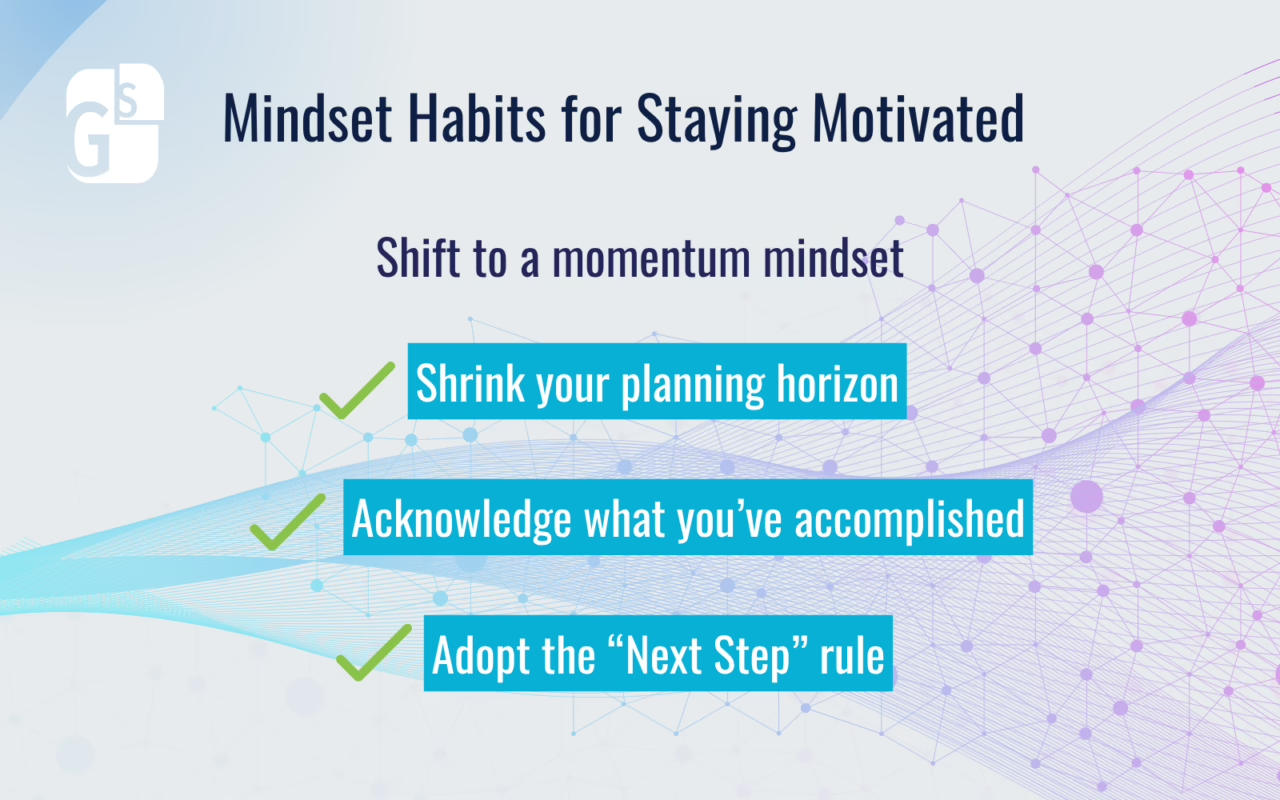
To break out of this loop, replace the deficit mindset with a momentum mindset:
- Shrink your planning horizon: Stop thinking about the six classes you need to graduate. Focus exclusively on the single module in front of you right now.
- Acknowledge what you’ve accomplished: At the end of each day, write down what you accomplished—even if it was just reading two lesson pages or submitting a single quiz. Progress fuels confidence far more effectively than pressure.
- Adopt the “Next Step” rule: When you log in, ask yourself: “What is the single smallest assignment I can finish in the next 30 minutes?” Completing one small task releases dopamine and breaks through the stuck feeling.
2. Recognize and Intercept Online School Burnout
Online school burnout looks different from traditional classroom fatigue. It rarely comes from physical exhaustion; it usually stems from digital overload, isolation, and constant task-switching. When you study on the same device you use to scroll social media, watch videos, and text friends, your brain gets drained easily.
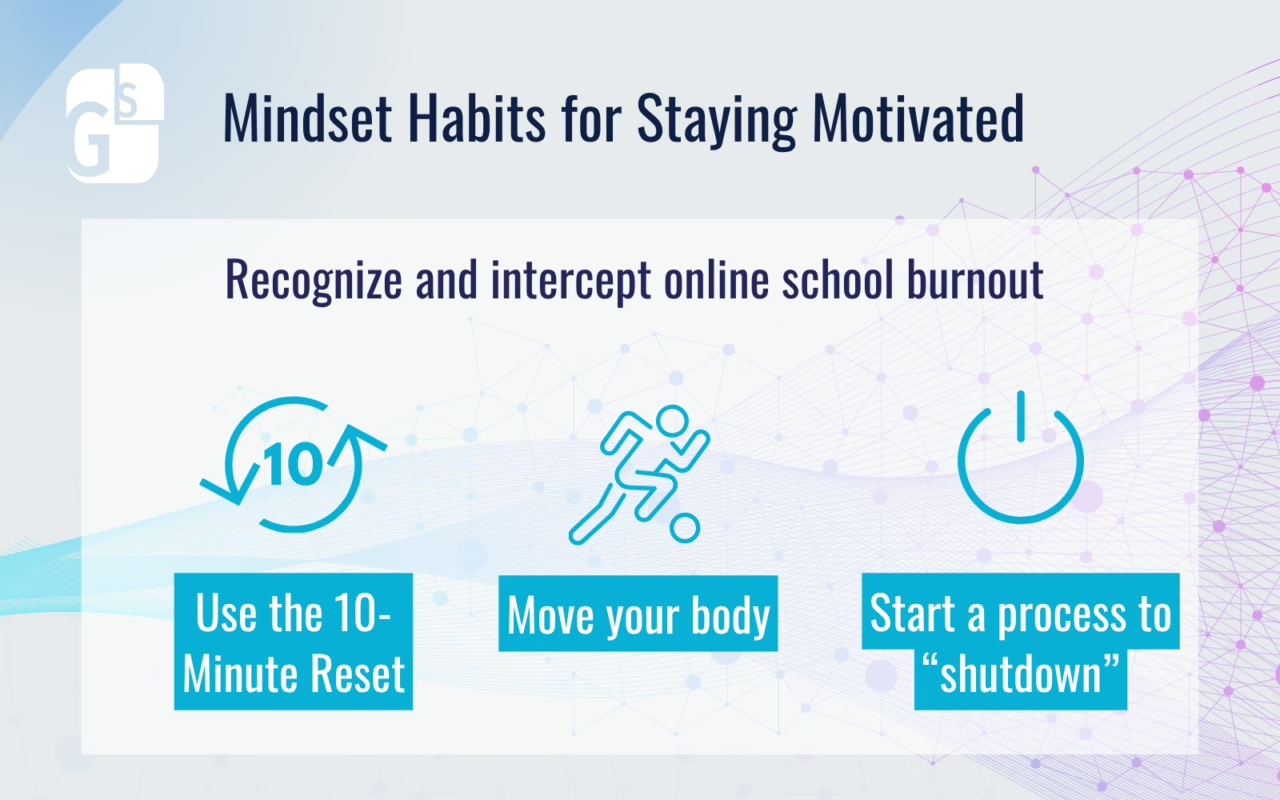
To protect your mental stamina:
- Use the 10-Minute Reset: When you feel immense resistance to starting, tell yourself you only have to work for 10 minutes. If you still want to stop after 10 minutes, permit yourself to step away. Most of the time, overcoming the barrier to starting is 90% of the battle, and you will naturally keep going.
- Physical state change: If your brain feels foggy while staring at a math problem, do not force yourself to stare at the screen for another hour. Stand up, drink a glass of water, walk outside for five minutes, or do a quick stretch. A physical reset clears mental friction faster than willpower alone.
- Establish a “Shutdown Ritual”: When your study session ends, physically close your laptop and clean your workspace. When learning happens at home, the boundary between “school time” and “rest time” easily blurs. Creating a clear end to your study day lets your mind recharge.
3. Replace Isolation with Human Connection
One of the most common reasons students abandon self-paced programs is the feeling that no one else sees the work they’re doing. When a lesson doesn’t make sense, it is easy to assume everyone else understands it and that you are the only one struggling.
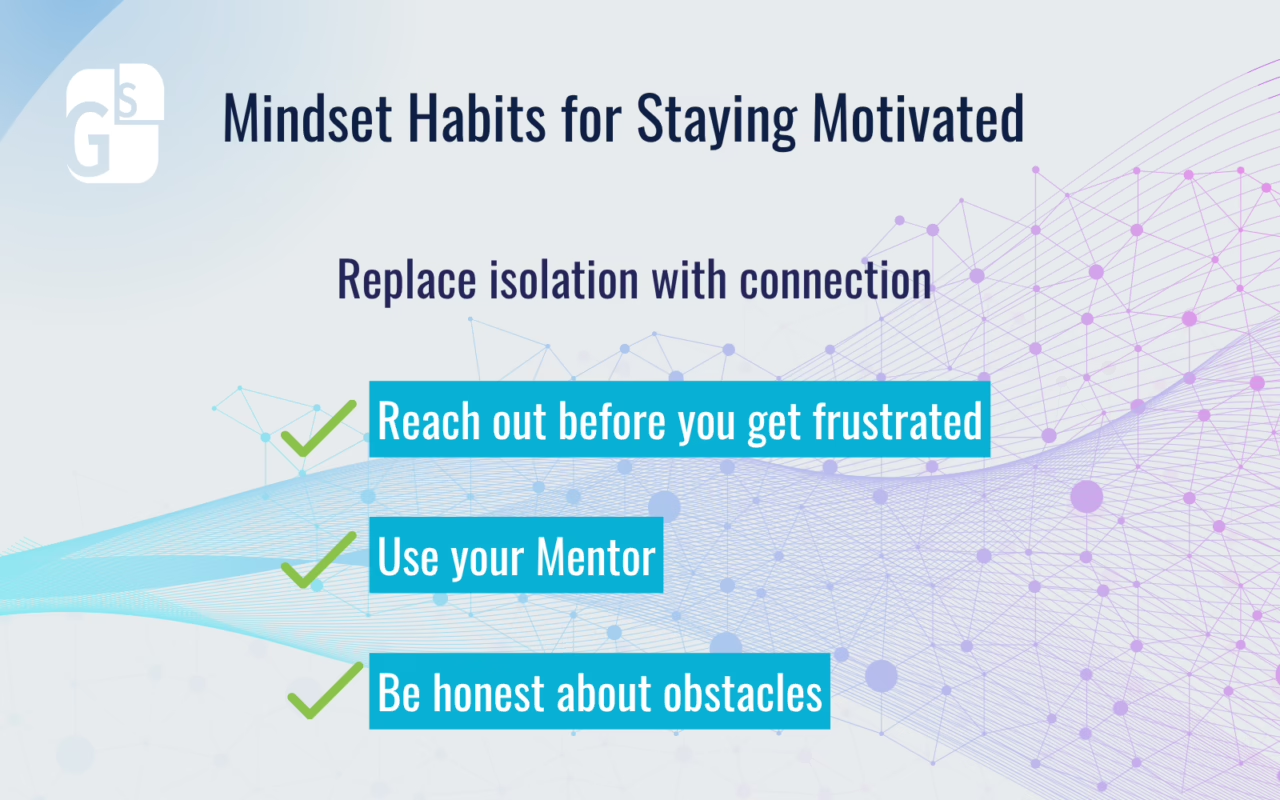
The most successful independent learners don’t work alone; they actively use their support network.
- Reach out before you get frustrated: Do not wait until you have failed a module test three times to ask for help. As soon as a concept feels unclear, message your teacher, academic coach, or mentor.
- Use your Mentor: Your Mentor isn’t there to grade you or police your schedule; they’re there to help you remove roadblocks, advocate for your needs, and keep you grounded when life gets chaotic.
- Be honest about obstacles: If a work shift changed, family responsibilities piled up, or personal stress is affecting your focus, communicate that with your support team. Programs like Grad Solutions are designed for flexible learning and exist to adapt to real life, not to punish you for it.
4. Create Wins to Rebuild Confidence
Confidence is not a personality trait, it’s a byproduct of an internal mindset of self-respect developed over time by keeping small promises to yourself. If you have been out of school for a while or had negative experiences in traditional classrooms, your academic confidence might need intentional rebuilding.
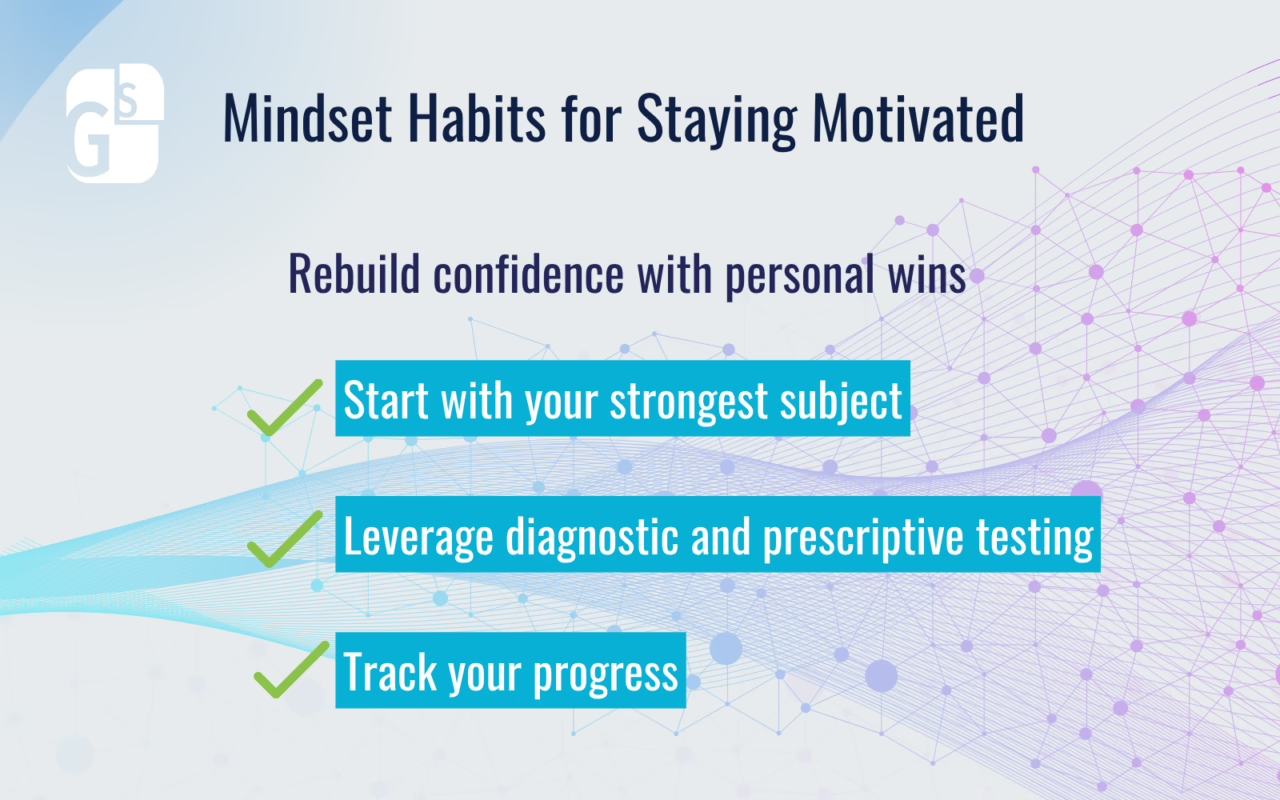
You can rebuild confidence with some personal wins. You can engineer quick wins into your study routine by:
- Starting with your strongest subject: If you are dreading an algebra unit, do not start your morning with it. Spend 20 minutes completing an assignment in an elective or a subject you enjoy first. Securing an easy “win” early in your study block builds the mental momentum needed to tackle harder material.
- Leveraging diagnostic and prescriptive testing: When starting a new course or credit recovery module, treat prescriptive tests as diagnostic tools rather than high-stakes exams. Testing out of topics you already know cuts unnecessary repetition and immediately speeds up your completion timeline.
- Monitor or create a visible progress tracker: Digital progress bars inside a portal are convenient, but tactile progress has undeniable power. Keep a printed sheet and color in a box for every credit or half-credit you complete. Seeing physical proof of your forward movement reinforces your sense of achievement.
5. Anchor Your Daily Routine to Your Core “Why”
When you are deep in the weeds of an essay draft or a history quiz on a Tuesday evening after working an eight-hour shift, abstract concepts like “graduation” can feel too distant to motivate you.
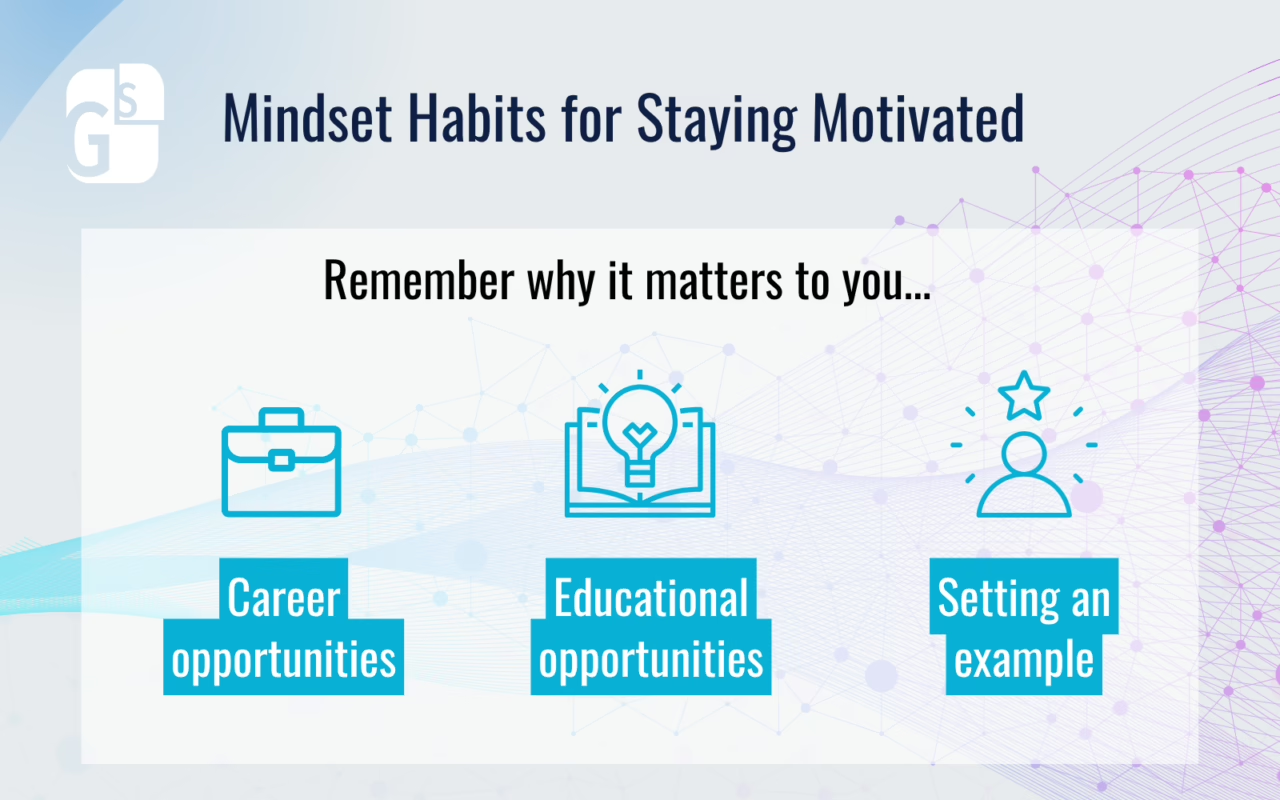
You need a clear, immediate anchor for why this effort matters to you personally. For example:
| Motivator Category | Practical Example | Daily Anchor |
|---|---|---|
| Career Advancement | Qualifying for a promotion, entering a trade apprentice program, or earning a pay bump | Post a printout of the job description or target hourly wage by your desk |
| Higher Education | Unlocking admission into community college or a university pathway | Keep the logo or campus photo of your target school as your phone wallpaper |
| Personal Milestone | Proving to yourself that you finish what you start; setting a standard for your family | Write a one-sentence personal commitment on a sticky note attached to your monitor |
When motivation dips, remind yourself that the diploma is not just a piece of paper. It is the key that unlocks the specific door you are trying to open.
The Path Forward
Falling behind is an event, not an identity. It does not mean you have failed, and it does not erase the progress you have already made. Academic success in a flexible program is rarely a straight line.
Success is more like a series of small, daily decisions to sit down, open the next lesson, and move forward by a single percentage point. When you’re ready to quit, take a deep breath, pick one small assignment, and take just one next step.

Ready to Get Started?
If you lost motivation to finish school and want to get it back, connect with a Grad Solutions Enrollment Counselor today!