Online School
Goal Setting for School Skeptics: Your Guide to Creating Achievable Goals

Read time: 7 minutes
Let’s be real, does the phrase “goal setting” make you want to close this tab? Do you feel panic at the thought of one more thing?
If you’re a current or former student who’s struggled in traditional high school, the idea of “setting goals” might sound overwhelming. Setting goals for school, for example can feel like a giant, impossible ask. Goals like “Get a 4.0 GPA,” “Have perfect attendance,” or “Finish this 20-page packet by tomorrow” sound like great things to achieve but are not always possible because, well — life.
When you feel like you’re drowning in a sea of “should do’s,” “need to do’s,” and “due dates,” setting more goals can feel like adding weight to your shoulders. If so, you should consider this: What if the problem isn’t you? What if the problem is the goals?
The “one-size-fits-all” system doesn’t work for everyone. Life gets in the way. Maybe you had to work, or take care of family. Maybe you have anxiety, or just learn differently.
Here’s the good news: You get to throw that old, broken system out.
If you’re between 16 and 21 and considering a fresh path to your high school diploma — like the flexible options we offer here at Grad Solutions — it’s the perfect time to learn a new way to set goals. A way that actually works for you, not against you.
This isn’t about becoming a perfect, super-organized robot. This is about learning how to take small, powerful steps toward a future you actually want.
Why Most School “Goals” Failed You
Goals that are given to you are often inefficient because they’re usually:
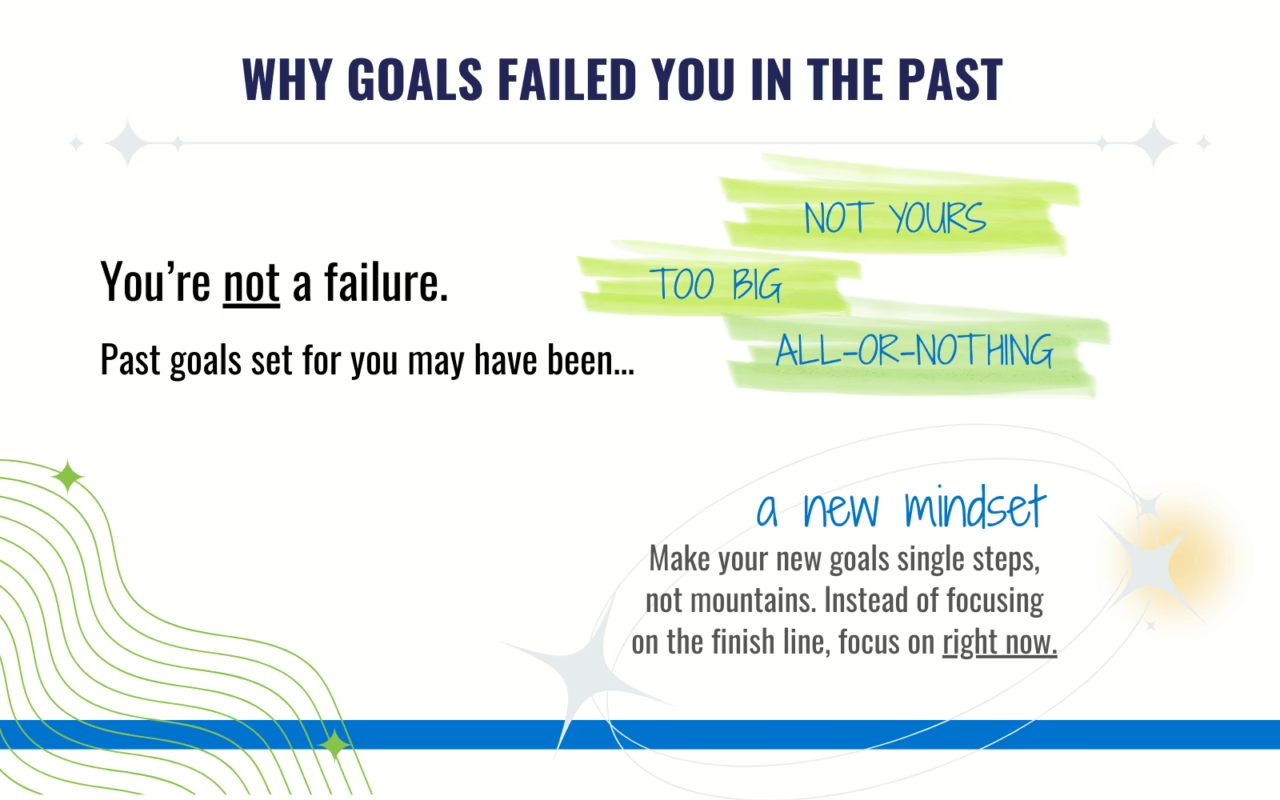
Too Big: “Graduate” is a massive goal. It’s so far away that it’s not motivating; it’s paralyzing.
Not Yours: They are goals set by a teacher, counselor, or your parents. They didn’t connect to what you could handle at that time.
All-or-Nothing: You either pass the final, or you fail the whole class. You either get a 90%, or you’re not “smart.” This leaves no room for learning, having a bad day, or just being human.
If this is you, it’s time for a “fresh start” mindset. Your new goals aren’t mountains, they are single steps.
The Toolkit: Build a Goal That Can’t Fail (SMART)
You may have heard of SMART goals, but let’s rebrand it for real life. This is your toolkit for building a goal that you can actually achieve.
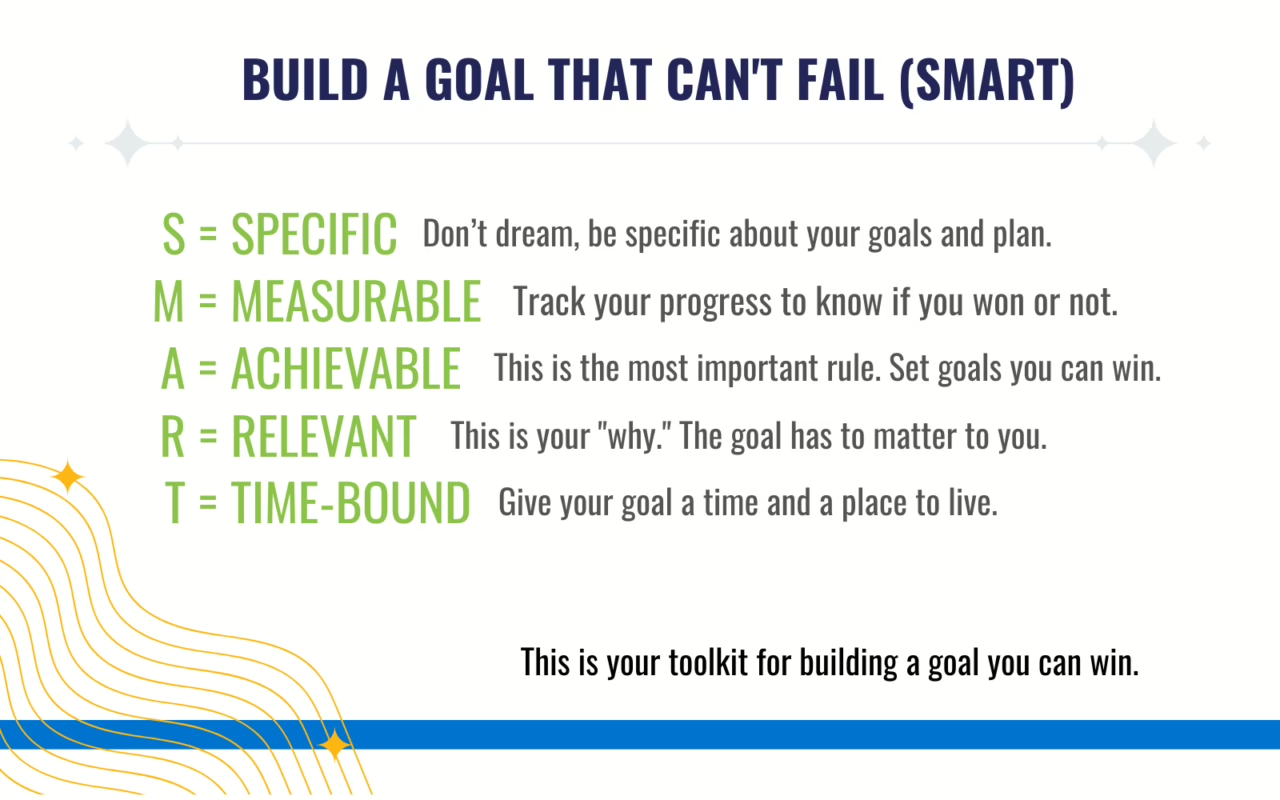
S = Specific (What exactly you are working toward?)
Vague goals are dreams. Specific goals are plans. “Be better at school” is a vague dream.
Some examples are…
Vague: “I want to finish my math class.”
Specific: “I will complete one lesson in my online math course.”
Vague: “I need to be more organized.”
Specific: “I will spend 10 minutes tonight cleaning out my school backpack.”
A specific goal gives you a clear target. You know exactly what “done” looks like.
M = Measurable (How do you know you did it?)
You need to be able to know, 100%, if you won or not. This is about tracking your progress.
Not Measurable: “I’ll study for my English test.”
Measurable: “I will study my English notes for 25 minutes.”
When the timer goes off, you won. You hit your goal. That small win builds momentum.
A = Achievable (Can you actually do this right now?)
This is the most important rule. You must set goals you can win.
If you haven’t done schoolwork in six months, your goal should not be “Finish my whole science class in one week.” That’s setting yourself up to fail, feel bad, and quit. We want to build momentum. The best way to do that is to start small.
Overwhelming: “I’m going to finish three classes this month.”
Achievable: “I am going to log in to my online class portal today.”
Seriously. That’s it. Just log in. The next day, your goal can be “Watch one 10-minute video.” Small wins build a habit. Big, impossible goals just build guilt.
R = Relevant (Why is it important?)
This is your “why.” If you’re only setting a goal because someone else told you to, you’ll run out of steam. The goal has to matter to you.
Not Relevant (Someone else’s goal): “My mom wants me to get all A’s.”
Relevant (Your goal): “I will pass this course, because it gets me one credit closer to graduating, and I want that diploma so I can apply for a better-paying job at the auto shop.”
Your “why” can be anything: To make more money, to get your own apartment, to prove to yourself you can do it, or to be the first in your family to graduate. Find your reason.
T = Time-Bound (When will it be done?)
A goal without a deadline is just a “someday” wish. This isn’t about high-stress deadlines. It’s about giving your goal a time and a place to live.
Not Time-Bound: “I’ll do my history assignment eventually.”
Time-Bound: “I will finish my history assignment by 4 PM on Tuesday.”
This gives you a little push. It helps you prioritize and protects you from procrastinating until it becomes a giant, stressful monster.
Create Your 3-Step Plan
Make your SMART goal real with a plan. Remember, it doesn’t happen on its own!
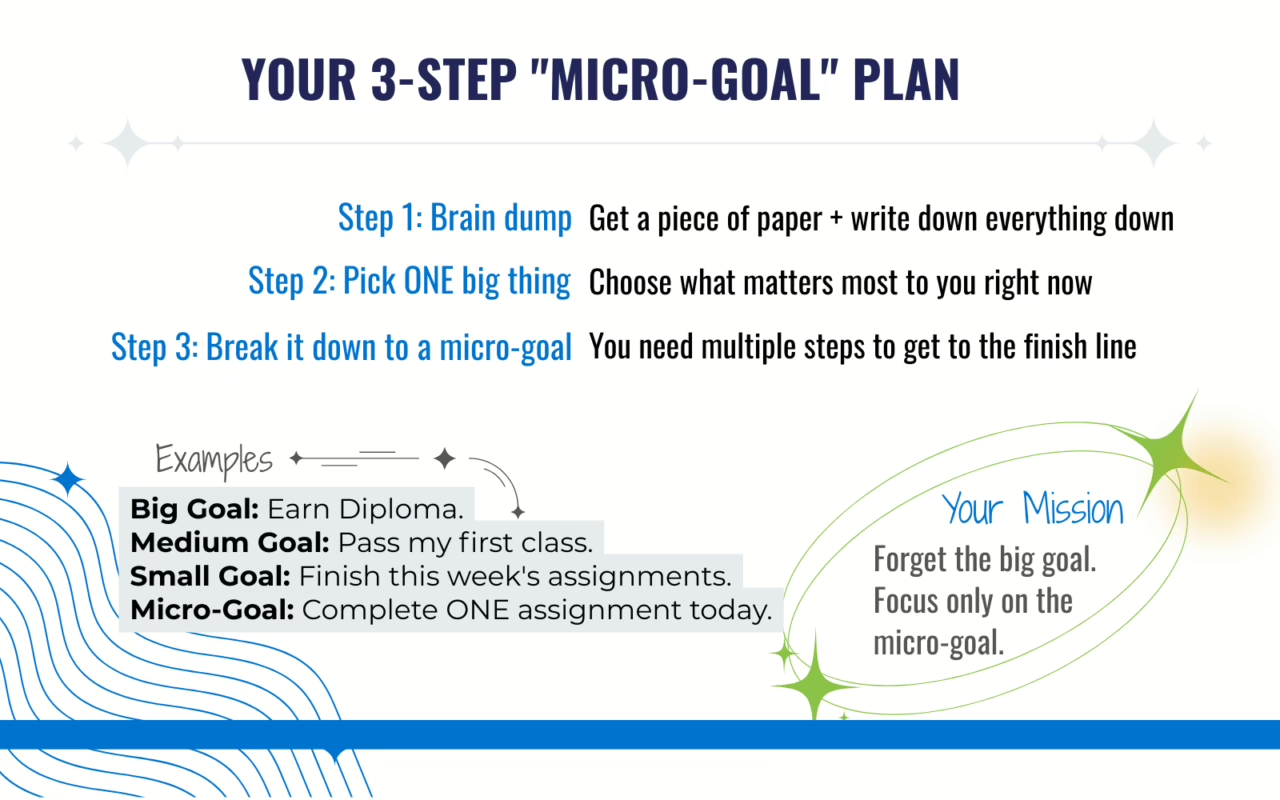
Step 1: The “Brain Dump” Get a piece of paper. Write down all the things you feel like you “should” do. (e.g., Get my diploma, get a job, learn to drive, clean my room, get in shape…). Just get them out of your head.
Step 2: Pick ONE “Big” Thing. Look at your list and pick the one thing that feels most important right now. For many people reading this, it’s: “Earn my high school diploma.”
Step 3: Break it down to a “micro-goal” That “big” goal is your destination, but you can’t get there in one jump. You need to find the very next step.
Here are some examples…
Big Goal: Earn my high school diploma.
Medium Goal: Pass my first class.
Small Goal: Finish this week’s assignments for that class.
Micro-Goal: Complete one of those assignments today.
That micro-goal is your only focus. It’s specific, measurable, achievable, relevant, and time-bound.
What Happens When You “Fail?”
Notice the quotes? You’re going to miss a day. You’ll procrastinate. You’ll set a goal that was secretly too big. Don’t be hard on yourself when you feel like you’ve failed: You are human.
In the old system, missing a day meant you were “failing.” In this new system, it’s just data. It’s feedback.
Did you set a goal to study for an hour and only last 15 minutes? You didn’t fail. You learned that your current focus is 15 minutes. Awesome! Tomorrow, set a 15-minute goal and win.
Did you skip your goal entirely? So what. You didn’t break a streak. You’re not “back to square one.” Your goal is still there. Your “why” is still there. Just hit the reset button and try again tomorrow.
Here in Arizona, you have options outside the traditional box. Programs like Grad Solutions are built on flexibility because we know life isn’t a straight line. Your goals shouldn’t be, either.
This isn’t just about getting a diploma. It’s about taking back control. It’s about proving to yourself, one small, achievable goal at a time, that you are capable of finishing what you start.
You can do this. The first step is just deciding what to do next.

Ready to Get Started?
It’s easy to get started with Grad Solutions. Connect with us to find out more. With free tutoring, mentoring, and many helpful resources, you’ll be on your way to earning your high school diploma!