Online School
Active Learning vs. Passive Reading: How to Study Smarter and Finish Faster

Read time: 5 minutes
Have you ever spent time carefully reading something, or thought you were reading, but reached the end only to realize you can’t remember anything?
You read every word and maybe even highlighted most of the page. But when it’s time to answer a question, nothing comes to mind. If this sounds familiar, don’t worry. There’s nothing wrong with your brain.
The problem isn’t your intelligence, focus, or ability to learn. It’s about how you study. Most of us learned to study by quietly reading from start to finish. But if you’re juggling school, work, family, and other responsibilities, passive reading wastes valuable time and doesn’t help you move closer to graduation.
If you want to finish your courses faster and earn your high school diploma, it’s time to switch from passive reading to active learning.
What is Passive Reading?
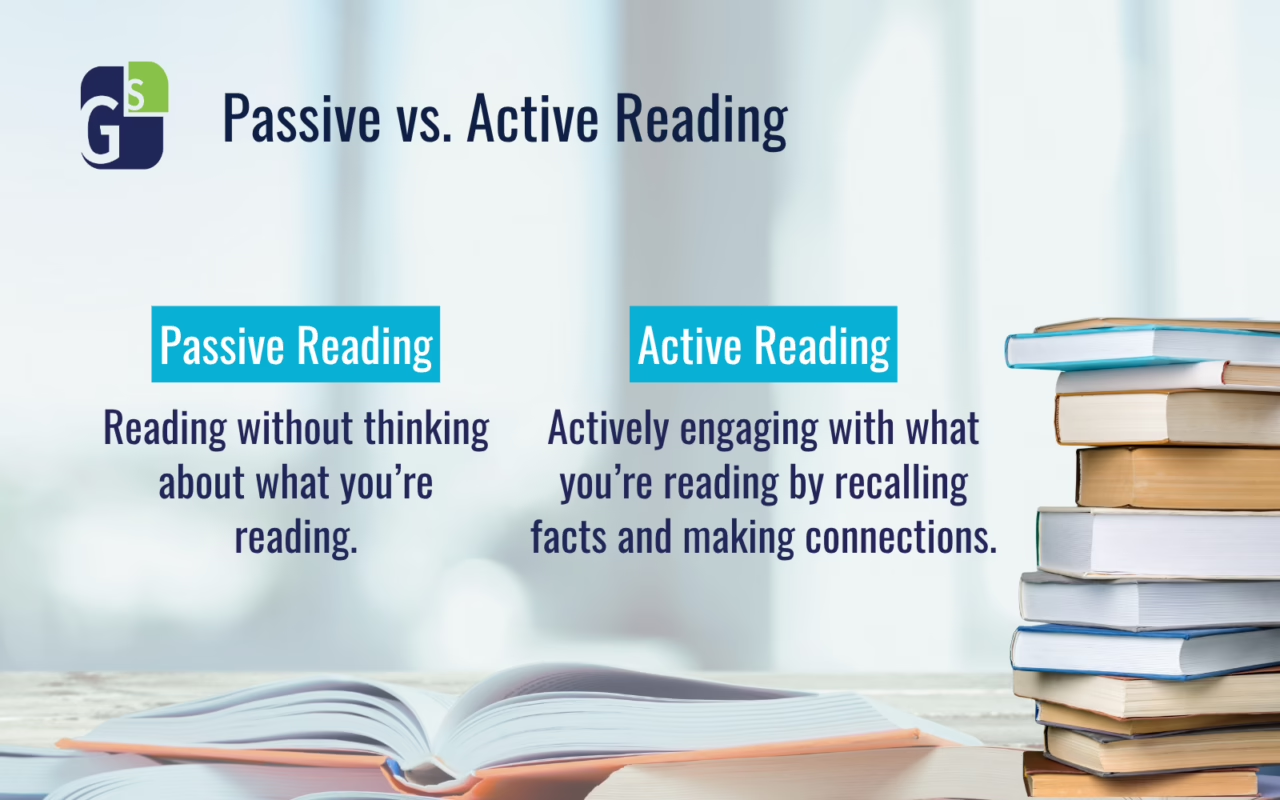
Passive reading is when you let the words go by without really thinking about them, almost like background music. You hope your brain will remember the information automatically.
Common passive habits include:
- Reading three pages in a row without stopping to think about what they mean.
- Highlighting entire paragraphs because “it all looks important.”
- Re-reading the same lesson over and over until it “looks familiar.”
Why This “Illusion of Reading” Slows You Down
When you read something again, your brain recognizes the words. It feels simple, so you think, “I’ve got this.”
But recognizing something isn’t the same as remembering it. Just because you know an answer when you see it doesn’t mean you can remember it during a quiz or test. Passive reading can make you feel confident, but it often leads to failed quizzes, retakes, and wasted time.
What is Active Learning?
Active learning is about using your brain like a muscle. Instead of just taking in information, you make your brain work by recalling facts, making connections, and solving problems.
When you challenge your brain by summarizing, asking questions, or using what you’ve learned, you build stronger memories. This helps you remember information much faster.
| Passive Reading | Active Learning |
|---|---|
| Action: Reading text straight through | Action: Turning headings into questions before reading |
| Mindset: “I hope I remember this.” | Mindset: “How does this connect to what I learned earlier?” |
| Note-Taking: Copying definitions word-for-word | Note-Taking: Writing summaries in your own everyday words |
| Review: Re-reading notes or slides | Review: Testing yourself without looking at notes |
| Result: High fatigue, low retention, slow progress | Result: Shorter study sessions, high retention, faster course completion |
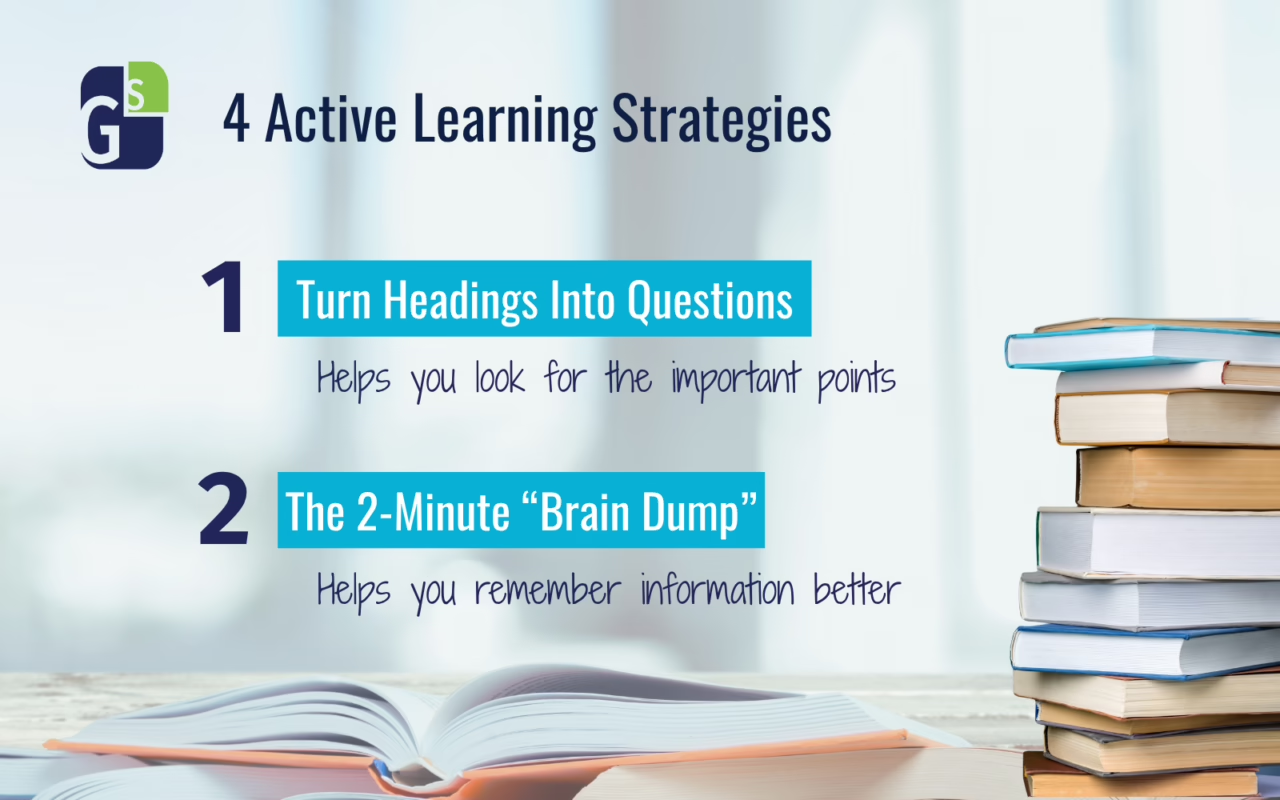
4 Active Learning Strategies to Power Through Your Coursework
You don’t have to spend more time studying. These strategies can actually help you study in less time and remember more.
1. Turn Headings into Questions
Before diving into a section, look at the heading. If the heading says “Causes of the American Revolution,” pause and turn it into a question: “Why did the colonists want to break away from Britain?”
Now your brain has a clear goal. Instead of just reading, you’re looking for answers. When you find important points, like taxation without representation or trade restrictions, write them down as bullet points.
2. The 2-Minute “Brain Dump”
After finishing a short section or video clip:
- Look away from the screen or close your notes.
- Grab a scrap piece of paper or open a blank document.
- Spend two minutes writing down (or typing) everything you can remember from that section.
Don’t worry about writing full sentences or making it look perfect. The real learning happens when you try to remember the information without looking. Afterward, check the lesson to see what you missed.
3. Try the“Explain It to a 5th Grader” Technique
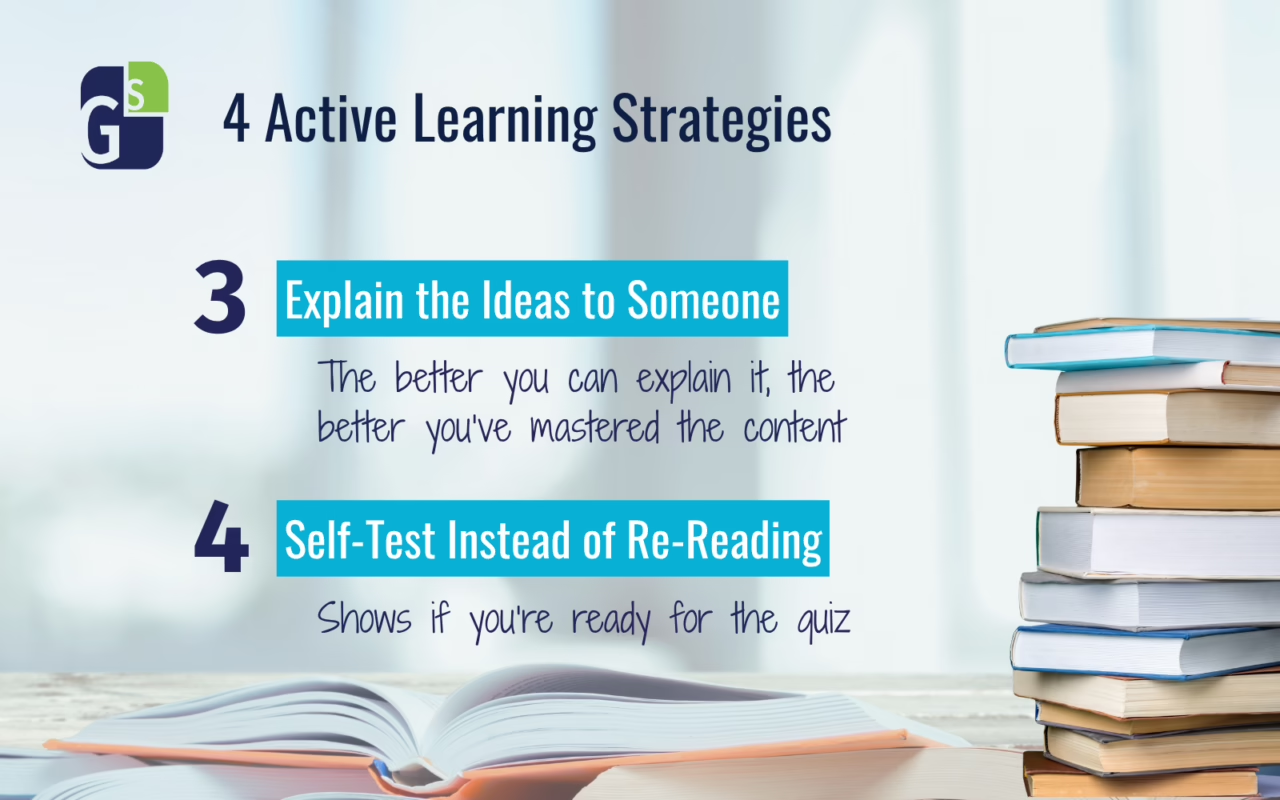
A true test of understanding is: Can you explain this idea?
Pretend you need to explain the idea to a younger sibling, your child, or a friend who doesn’t know anything about it. Avoid complicated textbook words. For example, if you’re learning about photosynthesis, you could say it’s “how plants cook their own food using sunlight, air, and water.”
If you get stuck or need to use complicated textbook definitions, you may want to review that part again.
4. Self-Test Instead of Re-Reading
Don’t wait for the quiz to test what you know. As you read, write questions for yourself:
Instead of writing: “Mitosis is cell division resulting in two identical daughter cells.”
Write this question in your notes: “What is the result of mitosis?”
When you review the next day, cover your notes and try to answer your own questions. If you can answer them, you’re ready for the course quiz.
Study Less, Graduate Sooner
Each time you pass a quiz on your first try, you build momentum. You skip the cycle of re-reading lessons, waiting for retakes, or doubting yourself.
Active learning might feel a bit harder at first than just reading, but the rewards are huge:
- Fewer study hours needed each week.
- Higher scores on exams and assessments.
- More confidence as you watch your course progress bar move forward.
Remember, your diploma isn’t about how many hours you spend in front of a screen. It’s about what you achieve in that time. Try one active learning strategy today on your next module, and take another step toward graduation!
If you’ve been struggling with learning on your own and want help, consider enrolling with Grad Solutions. As a Grad Solutions student, you get access to flexible online curriculum, and a team of people who want to help you finish. Whether you need one-on-one tutoring, guidance on your future, or someone to keep pushing you, we are with you each step of the way!

Ready to Take the Next Step?
Stop struggling on your own and learn how Grad Solutions can help you finish high school strong. Contact us to find to find out how free tutoring, mentoring, and many helpful resources can set you on your way to earning your high school diploma!